
It’s so easy to have a junky Easter. Everything in the big-box stores is cheap, everything is made in China, and EVERYTHING is plastic.
Want to do better?
Whether you want to incorporate just a few eco-friendly ideas or go whole-hog sustainable, check out the following plans to green every part of your Easter basket. Have tips of your own to contribute? Please add them in the Comments, and together we can build a community-driven ideas resource.
The Basket
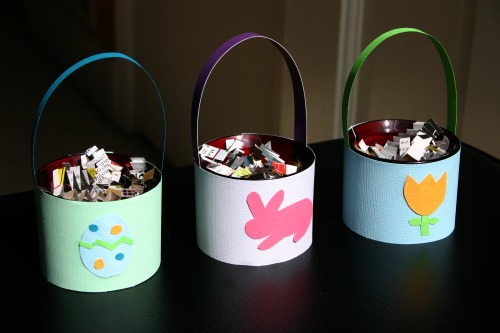
- candle holder: Empty jars from container candles make excellent small-sized Easter baskets–think teacher gifts, party favors, or baskets for older kids who’d rather have gift cards than stuffed bunnies. For a non-glass option, try frosting tubs, plastic soda bottles, or other food packaging.
- felted wool: The felted wool Easter basket is just one of the ideas Bonnie points to in her upcycled Easter basket round-up. In her post, you can also find tutorials for a milk jug Easter basket, a woven cardboard food packaging Easter basket, and a crocheted plastic bag Easter basket.
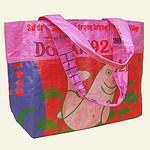
- fabric and sewing skills: Although this Easter-themed tote bag does require some new materials, it’s the only Easter basket that you’ll ever have to make. Use it yearly, then pass it down to the next generation of kids.
Candy Holders
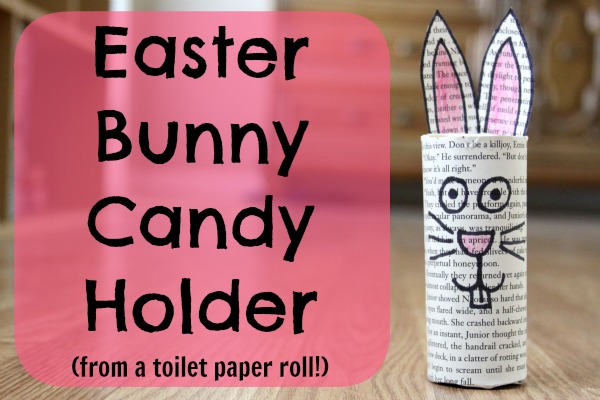
- toilet paper tube: Need to divvy up candy? Forget the plastic baggies and cellophane wrap, and whip together this toilet paper tube Easter bunny candy holder. Hint: it wouldn’t be hard to make this little critter into a bat, or a Cupid, or a leprechaun, or…
- pretty paper: Use either stash scrapbook paper or found papers to fold an origami bunny candy holder.
- brown paper bags: These brown paper treat bags are quick to make, since you can zip them through the sewing machine instead of waiting for glue to dry, and kids will be thrilled when the discover that they get to RIP them open!
Next >> Easter Eggs and Homemade Toys
Easter Eggs
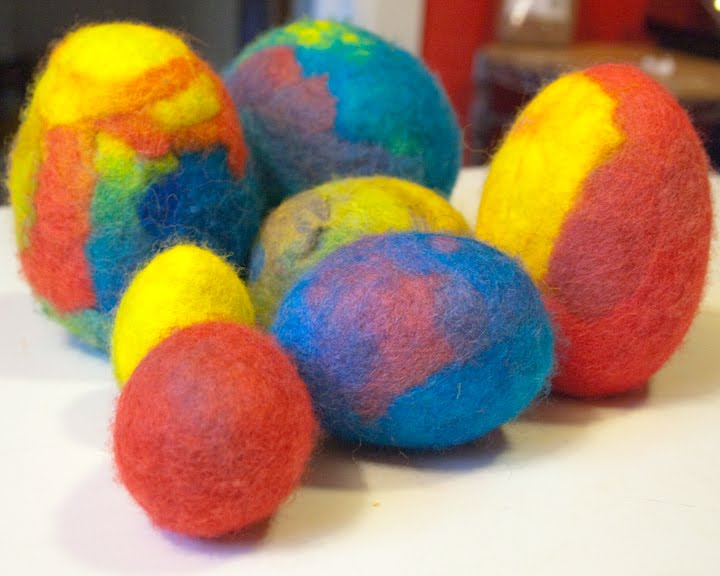
- wool roving: Use a wooden egg, or even one of last year’s plastic eggs, as a base to create these felted wool Easter eggs. The nice thing about using icky plastic eggs, if you have them, is that your finished Easter egg is now heirloom-quality. That’s one petroleum by-product that won’t end up in the waste stream! For another, even more natural, take on the project, you can also wet-felt rocks.
- scrap fabric: Make tie-dyed Easter eggs by adding stash scrap fabric to your regular food coloring routine. This method is a great way to use up the stained, moth-eaten, or otherwise unsuitable pieces that you’ve had to cut out of thrifted fabrics.
- recycled materials: Whether it’s silk ties, plastic water bottles, or old magazines, you can use it to make or decorate Easter eggs!
- stash embroidery floss: Embroidery floss, ribbon, yarn, twine, thread, or even strips of fabric–whatever stash materials you’ve got hidden in the scrap bin, you can use them to make these wrapped Easter eggs.
- fruits, veggies, and spices: There are a ton of natural, food-based methods to dye Easter eggs. You definitely have some of these natural dyes in your kitchen, and it’s fun to experiment!
Toys and Trinkets
- play silks: Play silks are so festive and bright, and you can save a ton of cash by dyeing them yourself. Try your hand at Kool-aid dyed play silks or play silks dyed using professional silk dyes, and substitute a couple of play silks for the “grass” in your Easter basket.
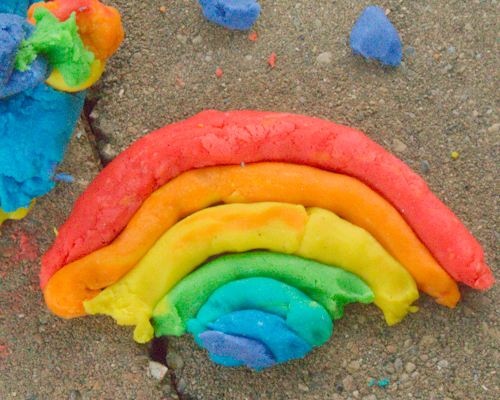
- play dough: You can make homemade play dough in any color, adding glitter, spices, or essential oils for extra fun. Play dough needs to be kept in an air-tight package; upcycled clear plastic deli containers work well for this.
- felt: I LOVE the felt PEEPS bunny from Made, and with a free downloadable pdf template, you can make the bunting from the tutorial, or lightly stuff your felt PEEPS to make a sweet stuffed toy. Look for either wool felt or Eco-fi recycled plastic felt.
- scrap fabric: A teeny Easter bunny sachet can be a hugg-able lovey, a toss-able plaything, and, filled with dried lavender, a soothing night-time pillow buddy.
- tree branches: New building blocks are always a hit. Tree blocks can be made with just a saw and a few fallen branches from your yard.

I reuse the same basket over and over again every year for Easter. I figure this is the most eco friendly way to use an Easter Basket.
This is a great list! We just made a cloth mache? basket. Glued a bunch of fabric scraps to the base of a balloon with a long piece going over the top to make a handle. Emma loves it. We went back and punched holes around the top to add little bits of yarn and ribbon.
Interesting! Does the basket have a flat bottom, or is it meant to hang?
We tried to tape it in place so that the bottom would be flat-ish, but it didn’t work out that well. I’m thinking of hot gluing a piece of rope or rolled up fabric to the base to make it a little platform. Should probably get on it…
Love all the spring colors, anything with flowers works for me.
Great ideas thanks you for the inspiration!
great ideas. We make Easter boxes of all different shapes and sizes from old cereal boxes, and decorate them with scraps of tissue paper, old newpaper and anything else we can find. Stick on a few beads or buttons to make an interesting pattern, and finish with ribbons or even handmade friendship bracelets that can be used as a non food treat.
Thanks for the inspiration! I reused a gift basket for my daughter’s Easter basket. I used blackberries to dye a playsilk for the “grass” and used a wood burner to decorate solid wood eggs. Much more meaningful than plastic Easter junk!
Pingback: Eat Drink Better | Starting an organic gift basket business | Eat Drink Better