
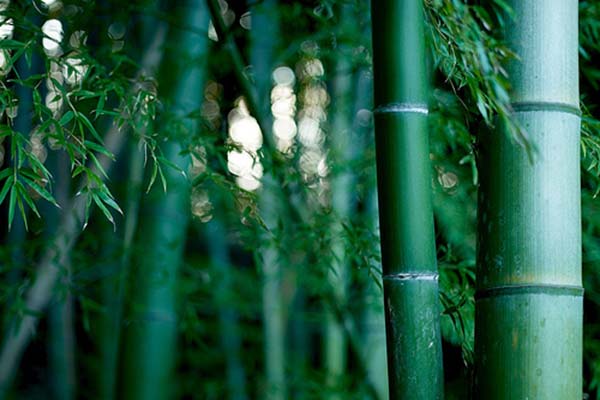
Bamboo is getting a lot of hype lately as an Earth-friendly fabric. Is it everything it’s cracked up to be?
This question has been nagging me lately, so I did a little bit of digging. It looks like there are some upsides and some downsides to bamboo fabric. Let’s start with the bad news first and talk about the good news last.
The Cons
The main issue with bamboo is the method that many companies use turn the stalks into fiber. The conventional method for producing bamboo fabric is similar to making rayon. The plant is mashed up and basically “cooked” in harsh chemicals like sodium hydroxide (another term for lye) and carbon disulfide. According to Michael over at Organic Clothing:
Breathing low levels of carbon disulfide can cause tiredness, headache and nerve damage. Carbon disulfide has been shown to cause neural disorders in workers at rayon manufacturers. Low levels of exposure to sodium hydroxide can cause irritation of the skin and eyes.
Nasty stuff! The process for creating and bleaching bamboo fabric sounds like it can be pretty toxic.
One of the major claims about bamboo is that it grows quickly, making it a sustainable resource, and its recent explosion in popularity has been putting bamboo’s quick growing properties to the test. Over-harvesting is such a problem now that “many species of the plant are on the verge of extinction.” According to Eco Geek, there is a biotech company working on a way to save these waning species of bamboo.
Yikes. Those are some serious downsides! But it’s not that easy. There are a lot of good things about bamboo fabric.
The Pros
Bamboo is actually not a tree, it’s a grass. Like hemp, it does not require harsh chemical pesticides and fertilizers to grow, and it actually helps improve the soil where it’s planted! Bamboo plants require very little water and absorb more greenhouse gases and release more oxygen than many species of timber trees. Not too shabby!
Not all bamboo uses the harsh chemical process described above. Some companies, like Boston-based Greenyarn are finding more ecofriendly means to turn bamboo into fabric. Other companies are using a process that not only requires more benign chemicals, but the processing is “closed loop,” meaning that over 99 percent of the chemicals are captured and used again. Look for certifications like Oeko-Tex, Soil Association, SKAL or KRAV. These are reputable third-party certifiers who verify that a company’s practices are environmentally friendly.
My Take
So how green is bamboo? You’ll have to do a little label-reading if you want to avoid the stuff made with carbon disulfide and lye. I think you come out ahead when you’re comparing it to conventional cotton, because of the pesticides and fertilizers that cotton requires, and it’s definitely a better choice than conventional fleece or polyester, which are made from petroleum products instead of natural materials. If you’ve got the option to use organic cotton or hemp, though, you’re better off opting for that.
The really good news is that the more we spread the word about bamboo’s pros and cons, the more companies will have to listen to our concerns and produce better bamboo!
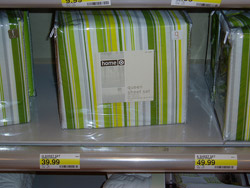
Image Credit: Creative Commons photo by Joi

What’s up with fleece? I thought it was made from recycled plastic bottles? Have I totally bought into some long term green washing?
Good article! Thanks for doing the research…
Nice blog too! ~Tim
thanks so much for covering this. As you said most bamboo fabric is far from ‘green’ and has long term negative effects on plant workers and entire ecosystems. Add to that: consumer demand in the West has made bamboo so popular that in some areas of SE Asia ancient forests are being clearcut to make more growing room for bamboo. A tre is like a great big storehouse of carbon, so when it’s cut, a huge whoosh gets let out into the atmosphere, and no amount of replanting will negate that. Organic cotton, as you said, is the greenest choice.
best
Lynda Fassa
author
Green Babaies, Sage Moms
Green Kids, Sage Famiilies
environemntal writer
PlanetGreen
founder
Green Babies, Inc.
You didn’t mention that virtually all bamboo grown in the world is processed or passes through China at some point, adding to the pollution caused by shipping these items halfway around the world, plus the fact that China is now well-known for unsafe manufacturing practices. The other, even bigger downside is that the growing popularity of bamboo is causing farmers to clear-cut old growth hardwood forests in Southeast Asia to make room for more bamboo to grow. This will upset the ecological balance and cause diseases to manifest themselves, creating a cycle of pesticide spraying and non-organic disease controls to be used, thereby destroying any benefit of using bamboo.
I’m intrigued by bamboo, like everyone else, but I think, in this case, that a lot more improvements need to be made in manufacturing and environmental impact before I can jump on that bandwagon.
@cody – Some fleece is recycled, but not all. It’s not greenwashing, but you do have to keep an eye on the labels.
@Tim, @lynda – Thank you!
@kath – Thank you so much for mentioning this! I considered talking about it coming from China because of the fair labor issue but couldn’t find any good sources. I didn’t know about the clear-cutting. It sounds sort of like the palm oil problem. That’s horrible! I totally agree – it’s an intriguing option, but I’m not quite sold.
It’s about time people start talking seriously about viscose bamboo. Usually it’s only called bamboo, but it’s truly a viscose made out of bamboo. Viscose it’s one of the worst fibres one can produce. In Europe his production is almost finished and was substituted by Lyocel/Tencel because of the impact on the environment. Thatś why you find viscose producer in third world countries. One of the latest marketing campaign was the bamboo viscose. I am afraid they are misleading consumers with a green message and incorrect labelling. It’s my opinion that you can’t indicate in the composition label Bamboo. Instead you should use at least Viscose made out of Bamboo (instead of eucalyptus). Viscose produced by Lenzing gets it’s wood from sustainable forests. I think no one can say that about bamboo producers.
Regarding the production of fabrics, bamboo viscose poses a lot of problems because of the very low quality of the fiber, making it harder to finish, with bigger and more expensive production. It has also a very low life spam. A piece made of bamboo viscose get unusable very quickly also.
For me it’s the worst cellulosic fibre around and marketed in way that is misleading to consumers. I don’t trust brands that state they have a great new fiber, the bamboo, they are trying to deceive me.
Thank you for researching this! I see bamboo popping up everywhere, there was a whole line of t-shirts made from it at Target. I had heard that the processing was not always great, and now I understand why. There really is no “magic green fabric” that doesn’t impact the earth in some way.
Thanks for all of the great feedback, guys! I’m appreciating all of the well-informed comments. Keep ’em coming!
Uh-oh, and I thought I was doing good by buying bamboo-containing socks at Target. I’d better check that label.
Around here (DC area), bamboo is considered almost a weed, because you cannot keep it from spreading and taking over your yard. It is everywhere along the roadside and between people’s yards. I was actually thinking of PLANTING some, if that was possible, in my postage stamp yard. I love the look and the shade and the beauty of it, and also that it grows fast. Still thinking on that one, though.
I’m so glad this has finally come up. Thanks so much for doing some digging and thanks to all the very informed commentary. I’m a hemp and certified organic cotton girl all the way 🙂
I appreciate you doing this research. I think that once big companies see how eco-concious we are becoming, they will have no choice but to follow us.
Pingback: The Bamboo Question | GlueandGlitter.com
Pingback: Fab Fabrics: Greenyarn’s Bamboo Ecofabric : Crafting a Green World
Bamboo grows wild without the assistance from chemical fertilisers and pesticides unlike cotton.
Fabric made from bamboo viscose is a natural moisture wicking agent. Moisture is taken from the body, on contact, and then instantly evaporates. Bamboo stays cooler in hot weather & warmer in cold.
Bamboo is warm and soft to touch so is comfortable to wear like silk. The only problem is that it doesn’t last long and holes form in the fabric so it needs to be mixed with another fibre.
I thought I’d better mention some good points about bamboo fibres and fabrics.
Rainforests cleared to grow bamboo! What about the American dust bowl of the thirties partly created by the extensive growing of cotton?
As for bamboo viscose being created with lye being used isn’t that how soap is made. The action of lye on oil or fat creating a new chemical called soap.
At the end of the day it’s not so much what clothes are made from but the amount of money that is wasted on disposable fashions. Buy fewer clothes and there will be more land left for wilderness and growing food
Pingback: Bamboo Buyer Beware: Green Decisions Aren’t Always Clear-Cut
I had heard rumblings about this, but this is a great article. Very helpful. Tweeted it because I don’t think most people know this. Of course every single thing has pros and cons, but knowing what to look for that is BETTER is a huge service. Thank you!
I totally agree with Lynn, there are pros and cons to everything but knowing what is a better alternative is great. A few years ago I first came across bamboo fabric while shopping for casual work clothes. I bought a cowl-neck short sleeve top in an unbelievably soft and drape-y knit fabric. I did a little internet searching when I got home, but didn’t find any real info about bamboo fabric other than it was made using a process similar to rayon. I haven’t used rayon in years because of the environmental issues in its manufacture (chemical-wise) and was disappointed to learn this. I’m really happy to now know about better options for making bamboo fabrics now and what to look for when I’m shopping.
Another con: where is the nearest bamboo forest? So, let’s add the energy used to ship this across the world.
Pingback: Fab Fabrics: Modal Made From Beechwood – Crafting a Green World
I love what you guys are doing here. We will have to share this on our blog http://www.bambubatu.com/blog/ and with our facebook fans. I hope you can do the same for us!
This is in response to where product is grown, cost of shipping, and I won’t comment on any chemical processes that are dumped on the poorest countries. The other day a contractor was telling me about a friend that raises crawfish in Louisiana shipped his product to North Carolina by way of China because that was the cheapest. Also, oranges grown in Florida are shipped to California and vice versa so they can be sold for higher prices.
I have some Bamboo growing in Dallas TX.
Thank you for all the information. I am a alpaca fleece producer, so I am confused on the remark about fleece.
Hey Catherine! I’m sorry if you were confused by something in the article. Can you expand a little on what was confusing? I’d be happy to clarify for you!
Pingback: Easy Baby Blanket | Glue and Glitter
I’m currently studying textiles and because there are no real methods of authentication the organic textiles industry is not trustworthy. If you did pay crazy cash to get that fabric (actually fabric, not just an expensive thing you bought on etsy) and did major research on the company you are dealing with chances are you are not buying organic cottons, etc. 70-90% of organic cotton on the market is not truely organic. But unless you do the legwork yourself and report to to the FDA (really hard since they only just managed to force companies to write “bamboo from rayon” on a product – they mainly stay out of this stuff. They can’t really test it and since it’s all outsourced you have no idea what you are getting. Half of the organic cotton you buy is just feeding an industry crapping all over the environment. Remember, you are responsible for doing due diligence and if a customer complains it will be on your head. Never buy organic cotton you haven’t fully researched or you’re supporting this fraud. Most crafters organic is likely to be fake because unless you are prepared to order a massive quantity regularly it isn’t economically feasible where these things are being produced. There may be some organic methods used at some point in the processing but not enough for it to be conspired organic. Oddly, about the only places you can get real organic clothing are the big box chains like H&M because they have the buying power to make such large quantities and contract people who can make it, therefor making it feasible financially for them. If you do not do insanely thurough due diligence you should not label your products organic.
Look for rayon manufacturers that utilize cleaner technologies (uncommon and more expensive because 90% of fabric production is in Asia and companies need to majorly redo all their very old equipment in order to do this) – lyocell rayon for instance uses less chemicals and also the better producers are able to reclaim much of the chemicals from the process and reuse them rather than discard. Sarah kadolphs textiles book is a good source of info. beware still though of big box companies, although they can afford to do it many are terrible regarding due diligence. Lulumon for instance was found to have made no effort to look into one of their sources for seaweed made clothing (and furthermore made the claim tht wearing it benefitted your health…. Nope!) and testing revealed the seaweed was absent from the clothing all together. Simply testing these,ves could have told them this – they blamed the manufacturer that they took at their word – BS and a half. Big company, they can and should afford to test for themselves.
Oh, I’m addition to my last post a good way (but not infallible because companies can get away with a lot of lying because of the nearly totally absent regulation of the textile industry – we have the FDA which avoids it and that’s about it) is to possibly find where these big stores are commissioning their huge organic orders and buy overstock from the suppliers.
All soft bamboo has gone through harsh chemical processes, it is impossible to turn bamboo into a non course material without chemical breakdown – the key is finding technologies like lyocell that use less chemicals and have a method of retrieving and reusing chemicals left in the processing baths. And as it is now illegal to call it bamboo and must be stated as “bamboo from rayon” (because calling it bamboo is the equivalent of calling acetate or some harsh viscose rayon “recycled wood pulp” or “cotton linters (left over cotton bits and peices they can’t use to make cotton fabric) Eco fabric! They are not natural at all, they are man made cellulose based fibres that use whack loads of chemicals to create a group they push through a spinnerets into more chemicals to create an entirely new fibre.
Also, FYI – recycled polyester is bunk too.,zero way to tell if the chips have been recycled and companies take advantage of this. Furthermore, their are lots of uses for recycled soda bottles anyway. Don’t need them as bamboo chips. They can reclaim poly other ways. Some group tried to put a coding of some sort I’m it to make testing whether it was real recycled poly but it never ca,e through. Most of the poly chips these companies buy on alibaba are fake. So even if they were trying to recycle they probably aren’t.
Thank you for this insight. I ALWAYS read my labels, but it is really helpful to find a resource that provides information about what I am reading for.
~Namaste~
Pingback: Feelgood Style | Sustainable fashion reporting, organic beauty tips, DIY projects + tutorials, + natural product reviews.
i dont het it