
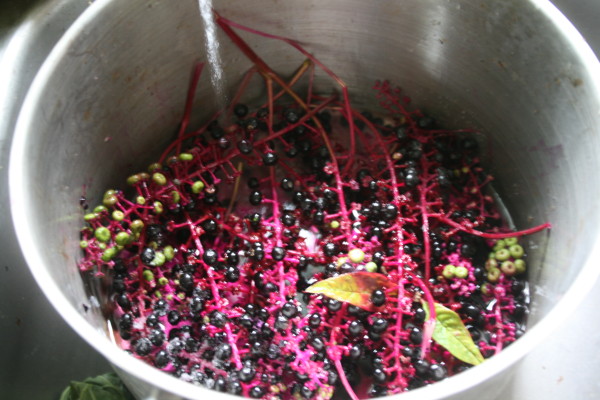
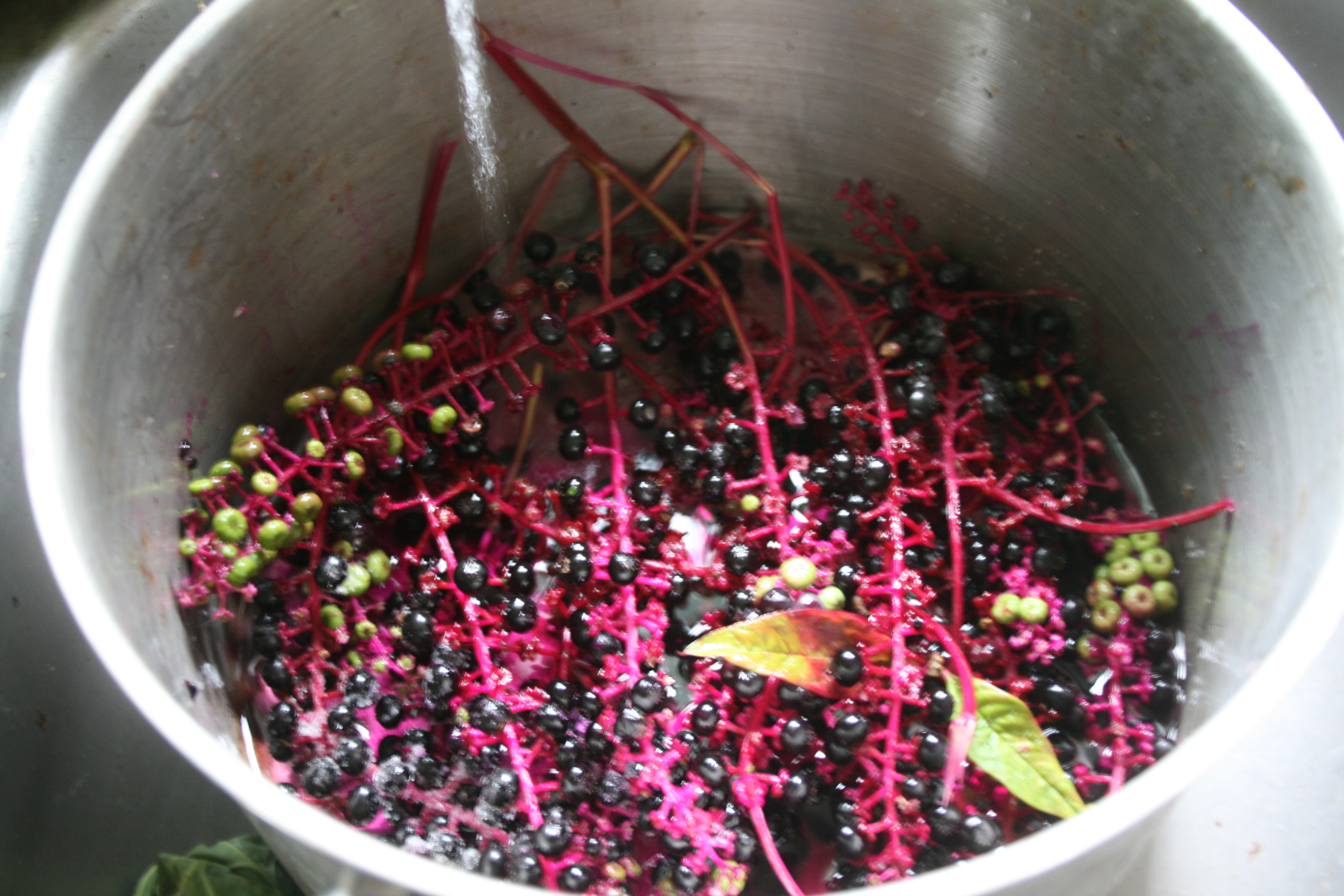
 One of the things about being an artist that has always bothered me is it’s a hobby (or life) which is geared towards social & political change, yet is entirely toxic to the artist and the earth. Which is an oxymoron that really hit home for me when I became chemically sensitive from the overuse of unsafe materials in unventilated areas. For years after I contemplated what art really meant to me if I could not use the toxic oils, acrylics, stains and glue I was accustomed to- all the beautiful bright colors & goop I had based my entire style on.
I love the idea of making vibrant meaningful art from materials that are locally, organically, and safely sourced– and was shocked to find that we have things in our back yard and grocery that create quality art that’s sure to make your heart thump and hands clap. These videos are of the painting process using poke berry & turmeric paints, made easily by boiling each with some kosher salt for about 45 minutes. I started 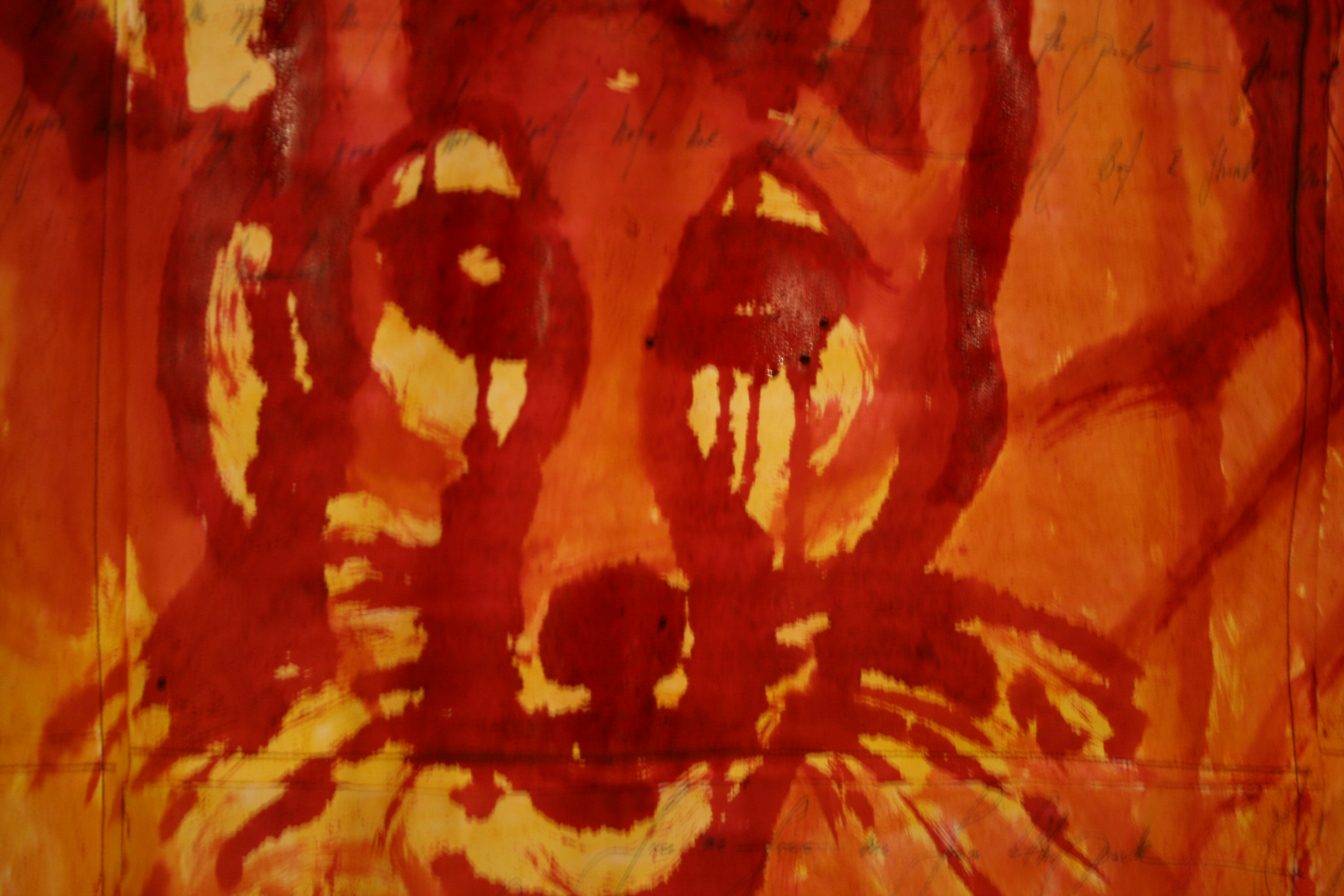 experimenting with these paints a few months ago and the color has not faded at all- plus you can mix these organic colors together to get more variations. The paint brushes I used are made with human hair (mine and my neighbor’s), a stick and a rubber band to hold the hair in place (you can shape it perfectly with scissors!). The “canvas” is paper sewn together and hung in a tapestry fashion with locally woven organic cotton scraps.
This is one seriously locally organicy chemical free project, which I think I will just call Loganic for short. 😉 Check out the process in these fun clips below!
Part 1 Poke Berry Paint (magenta)
[youtube=http://www.youtube.com/v/XNnBEiFgqyA&hl=en&fs=1]
Part 2 Poke Berry and Turmeric Paint (magenta and yellow)
[youtube=http://www.youtube.com/v/kixNUhTqDaU&hl=en&fs=1]
Part 3 Poke Berry and Turmeric Paint Mixed (magenta, yellow, red, orange)
[youtube=http://www.youtube.com/v/3UcHJHZpKR0&hl=en&fs=1]
Yay for organic paints!!!



I am so happy I found this site and I’m so happy to know there are alternative art supplies. I’ve already blogged about your site and look forward to reading more.
Thanks a bunch!
I am so happy I found this site and I’m so happy to know there are alternative art supplies. I’ve already blogged about your site and look forward to reading more.
Thanks a bunch!
I am so happy I found this site and I’m so happy to know there are alternative art supplies. I’ve already blogged about your site and look forward to reading more.
Thanks a bunch!
I *LOVE* this idea! I’ll admit, the effect my painting habit has on the environment does cause me some stress, so I’m super excited about these ideas! I’ll be linking to this.
I *LOVE* this idea! I’ll admit, the effect my painting habit has on the environment does cause me some stress, so I’m super excited about these ideas! I’ll be linking to this.
I *LOVE* this idea! I’ll admit, the effect my painting habit has on the environment does cause me some stress, so I’m super excited about these ideas! I’ll be linking to this.
That’s awesome. I recently tried to dye some stuff with amaranth. Didn’t work. I probably should have tried a recipe instead of guessing.
That’s awesome. I recently tried to dye some stuff with amaranth. Didn’t work. I probably should have tried a recipe instead of guessing.
That’s awesome. I recently tried to dye some stuff with amaranth. Didn’t work. I probably should have tried a recipe instead of guessing.
By the by, I found this site via oneprettything
By the by, I found this site via oneprettything
By the by, I found this site via oneprettything
Just wanted to point out that just because it is a plant and organic does not make it non-toxic. Pokeweed is very toxic if ingested. There are a few parts of the plant that are less toxic if prepared in certain ways, and gathered at certain times. I would hate for someone, or their pets, to be made ill or die because the plant was “natural”
reference website:
http://www.ces.ncsu.edu/depts/hort/consumer/poison/Phytoam.htm
Pokeweed does make a good, longlasting colorant, one of its other names in “inkberry”, The Declaration of Independence is written in an ink made of fermented pokeberry juice.
Just wanted to point out that just because it is a plant and organic does not make it non-toxic. Pokeweed is very toxic if ingested. There are a few parts of the plant that are less toxic if prepared in certain ways, and gathered at certain times. I would hate for someone, or their pets, to be made ill or die because the plant was “natural”
reference website:
http://www.ces.ncsu.edu/depts/hort/consumer/poison/Phytoam.htm
Pokeweed does make a good, longlasting colorant, one of its other names in “inkberry”, The Declaration of Independence is written in an ink made of fermented pokeberry juice.
Just wanted to point out that just because it is a plant and organic does not make it non-toxic. Pokeweed is very toxic if ingested. There are a few parts of the plant that are less toxic if prepared in certain ways, and gathered at certain times. I would hate for someone, or their pets, to be made ill or die because the plant was “natural”
reference website:
http://www.ces.ncsu.edu/depts/hort/consumer/poison/Phytoam.htm
Pokeweed does make a good, longlasting colorant, one of its other names in “inkberry”, The Declaration of Independence is written in an ink made of fermented pokeberry juice.
How cool!
How cool!
How cool!
Thanks Alison for pointing that out- non toxic does not mean we should eat something, poke berries are not for human consumption, but they do not have chemical offgasing and are not harmful to the earth if it was poured out onto the ground. I am looking for ways to make colors, that are biodegradable, don’t hurt the earth, and don’t gas chemicals into the air that are dangerous to our health.
And like any dye or paint, wash your hands/skin if you get it on there because it will color your skin as well!
Thanks Alison for pointing that out- non toxic does not mean we should eat something, poke berries are not for human consumption, but they do not have chemical offgasing and are not harmful to the earth if it was poured out onto the ground. I am looking for ways to make colors, that are biodegradable, don’t hurt the earth, and don’t gas chemicals into the air that are dangerous to our health.
And like any dye or paint, wash your hands/skin if you get it on there because it will color your skin as well!
Thanks Alison for pointing that out- non toxic does not mean we should eat something, poke berries are not for human consumption, but they do not have chemical offgasing and are not harmful to the earth if it was poured out onto the ground. I am looking for ways to make colors, that are biodegradable, don’t hurt the earth, and don’t gas chemicals into the air that are dangerous to our health.
And like any dye or paint, wash your hands/skin if you get it on there because it will color your skin as well!
Hi,
Love your work. I have a few questions. Do you have the ratio of kosher salt to poke berrier to share?
Also, reading about pokeberry ink, it sounded as though it yellows over time due to UV exposure. Has this happened to your work or does the kocher salt inhibit this?
Thanks and keep up the good work. I have more sites on health, materials and art if you ever need references.
Jenny
Hi,
Love your work. I have a few questions. Do you have the ratio of kosher salt to poke berrier to share?
Also, reading about pokeberry ink, it sounded as though it yellows over time due to UV exposure. Has this happened to your work or does the kocher salt inhibit this?
Thanks and keep up the good work. I have more sites on health, materials and art if you ever need references.
Jenny
Hi,
Love your work. I have a few questions. Do you have the ratio of kosher salt to poke berrier to share?
Also, reading about pokeberry ink, it sounded as though it yellows over time due to UV exposure. Has this happened to your work or does the kocher salt inhibit this?
Thanks and keep up the good work. I have more sites on health, materials and art if you ever need references.
Jenny
Hey Jenny –
Each time I didnt measure the Kosher salt but I would say i put in at least a cup of it. None of mine have yellowed at all, not even any indication that they might – but I will note this and say that maybe storage can be done in the dark if you dont have them hanging on display. I have not put any of them in direct sunlight but that would definitiely effect the color, since i have seen it happen on fabric.
Hey Jenny –
Each time I didnt measure the Kosher salt but I would say i put in at least a cup of it. None of mine have yellowed at all, not even any indication that they might – but I will note this and say that maybe storage can be done in the dark if you dont have them hanging on display. I have not put any of them in direct sunlight but that would definitiely effect the color, since i have seen it happen on fabric.
Hey Jenny –
Each time I didnt measure the Kosher salt but I would say i put in at least a cup of it. None of mine have yellowed at all, not even any indication that they might – but I will note this and say that maybe storage can be done in the dark if you dont have them hanging on display. I have not put any of them in direct sunlight but that would definitiely effect the color, since i have seen it happen on fabric.
Pingback: Handmade Holidays: Fun Rolling Pin Art Projects : Crafting a Green World
Pingback: Organic Painting
Pingback: Environment News Feed » Handmade Holidays: Fun Rolling Pin Art Projects
Hi Leslie,
Thanks for the response. My pokeberries are just getting ripe and I plan on trying this recipe for ink.
I was also reading that iron may actually enable the ink to last. There is some reasoning that the ink used on the Declaration of Independence used both pokeberry and an iron compound for longevity.
Let us know how your art is holding up.
Love your site.
Jenny
Hi Leslie,
Thanks for the response. My pokeberries are just getting ripe and I plan on trying this recipe for ink.
I was also reading that iron may actually enable the ink to last. There is some reasoning that the ink used on the Declaration of Independence used both pokeberry and an iron compound for longevity.
Let us know how your art is holding up.
Love your site.
Jenny
Hi Leslie,
Thanks for the response. My pokeberries are just getting ripe and I plan on trying this recipe for ink.
I was also reading that iron may actually enable the ink to last. There is some reasoning that the ink used on the Declaration of Independence used both pokeberry and an iron compound for longevity.
Let us know how your art is holding up.
Love your site.
Jenny
That was awesome to see. Thank you so much. We use purple cabbage and dandilions.
Dear Ms Leslie Richards,
Originally I was browsing with organic painting as the keywords. I was told that organic painting is a kind of branch of the art of painting. I found the site of Adrian Navarro which gives me some understanding and examples of organic painting. From the front cover of PinkFloyd music album I noticed that organic painting as a way of creating a nice painting based upon the beauty of nature: plants, fish, flowers, scenery etc. But, from this website, you give me a different perspective. Am I wrong?
By the way, I am an engineer by education and training.
Looking forward to hear enlightment from you.
Thank you so much,
KK
Dear Ms Leslie Richards,
Originally I was browsing with organic painting as the keywords. I was told that organic painting is a kind of branch of the art of painting. I found the site of Adrian Navarro which gives me some understanding and examples of organic painting. From the front cover of PinkFloyd music album I noticed that organic painting as a way of creating a nice painting based upon the beauty of nature: plants, fish, flowers, scenery etc. But, from this website, you give me a different perspective. Am I wrong?
By the way, I am an engineer by education and training.
Looking forward to hear enlightment from you.
Thank you so much,
KK
Dear Ms Leslie Richards,
Originally I was browsing with organic painting as the keywords. I was told that organic painting is a kind of branch of the art of painting. I found the site of Adrian Navarro which gives me some understanding and examples of organic painting. From the front cover of PinkFloyd music album I noticed that organic painting as a way of creating a nice painting based upon the beauty of nature: plants, fish, flowers, scenery etc. But, from this website, you give me a different perspective. Am I wrong?
By the way, I am an engineer by education and training.
Looking forward to hear enlightment from you.
Thank you so much,
KK
Very inspiring, thank you! I had always been told that natural pigments would fade quickly, but you have me wondering. Is it the kosher salt that fixes the color? If anyone has some good links on using natural materials for painting over whitewash or natural plaster, I would love to know more. I want to do make some murals on a cob wall.
Very inspiring, thank you! I had always been told that natural pigments would fade quickly, but you have me wondering. Is it the kosher salt that fixes the color? If anyone has some good links on using natural materials for painting over whitewash or natural plaster, I would love to know more. I want to do make some murals on a cob wall.
Very inspiring, thank you! I had always been told that natural pigments would fade quickly, but you have me wondering. Is it the kosher salt that fixes the color? If anyone has some good links on using natural materials for painting over whitewash or natural plaster, I would love to know more. I want to do make some murals on a cob wall.