You can cross stitch onto burlap and so many other unconventional materials!
In my opinion, the worst thing about enjoying a hobby is having to purchase new materials for that hobby. Not only am I attempting to explicitly boycott the economy this year, but I also already have plenty of stuff, and buying new stuff just to use to make more stuff is not very appealing. I want to use all the stuff I already have to make more stuff, thank you very much!
In my opinion, the best thing about enjoying a hobby is the problem-solving, including figuring out unconventional materials to use instead of ones that you’d otherwise have to buy from the mass market. I have so much more fun when I get to use up stuff I already own, especially when I can discover new-to-me ways to utilize my stuff to support all my fun hobbies!
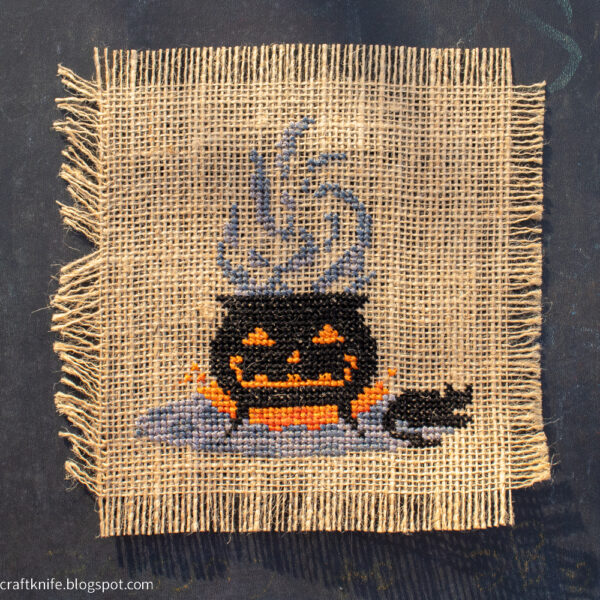
To be fair, burlap is not better than Aida, although it does also have the same open weave style that makes counted cross stitch easier. Actually, I’m very near-sighted, and I find burlap easier to stitch on than Aida because the holes are a little larger. But because burlap is rustic by intention, the weave isn’t even, and some of the threads are significantly larger than others. Using more strands of embroidery floss, which you already need to do in order to compensate for the larger holes, masks this issue so that the finished stitches aren’t noticeably different sizes, but still. It’s just one of the ways in which burlap is an unconventional material to cross stitch on!

For my most recent project, the Jack-o-lantern cauldron from Creepy Cross-Stitch, I used three strands of embroidery floss, and I think I could have easily used four strands instead, especially with the black. But three strands gave good coverage, and I love how burlap is naturally a neutral background fabric.
Because burlap is so extremely open-weave, fraying is a real issue, but it’s easily solved with masking tape around the edges of the fabric. And when you’re finished, you can selectively remove threads from the edges to make the fraying a feature, not a bug.
Burlap is by no means soft, and those of you who commonly cross stitch on linen are likely horrified at the thought of stitching on such rough fabric, but I love the texture, and I love the utilitarian ethos of the fabric. I like to use burlap as an outer lining fabric for bags, and I’m VERY stoked at the thought of embellishing some of those bags with cross stitch, now that I know it’s possible.
Want to know what else is possible to cross stitch on? Check out these ideas!
Cross Stitch on Art Canvas
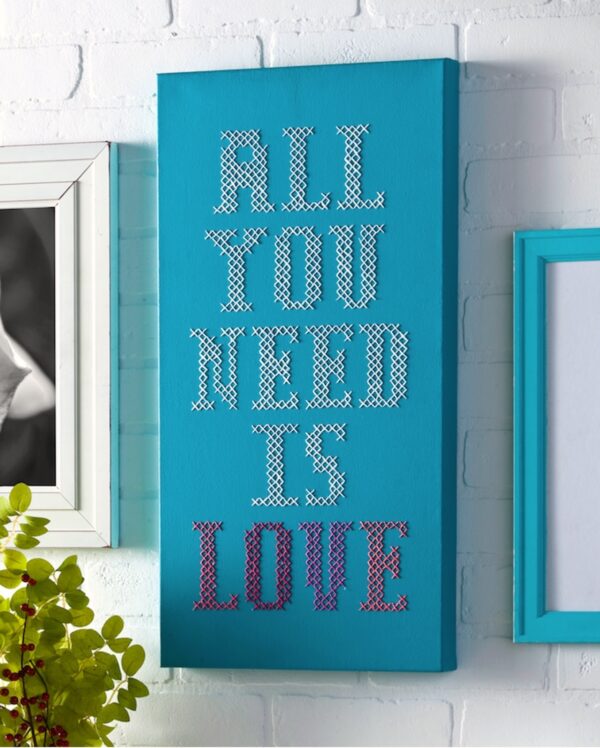
If you’ve ever seen a painting and wondered if you could punch it up with a little hand-stitching, then you were right! You can overpaint a stretched canvas and create an all-new cross-stitch design on it, or you could embellish a thrifted painting with cross stitch.
Cross Stitch on Cane Weave or Wicker
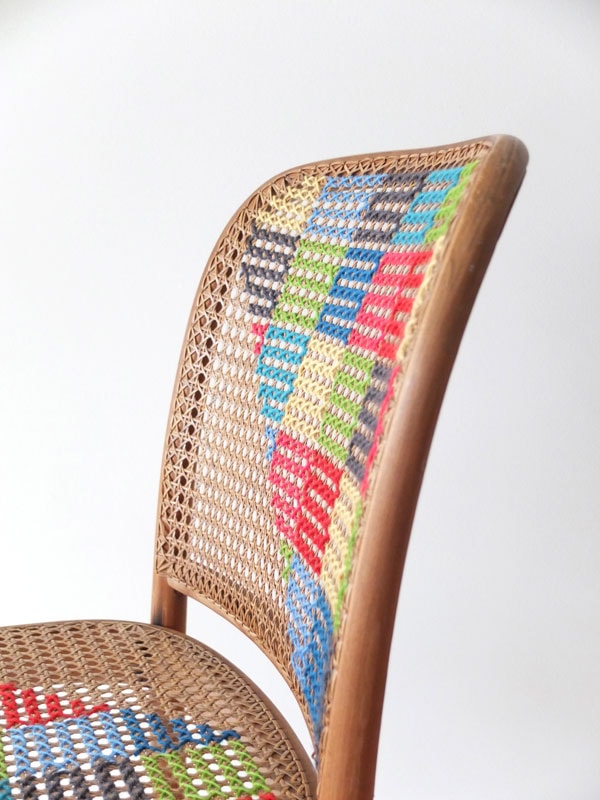
This is a great way to refresh an old wicker chair, or any kind of cane weave. Yarn works best for this, although you don’t have to try to find a yarn so chunky that it fills in all the gaps in the weave. I think the fact that the look stays so open is part of why it’s so pretty!
Cross Stitch on Cardstock
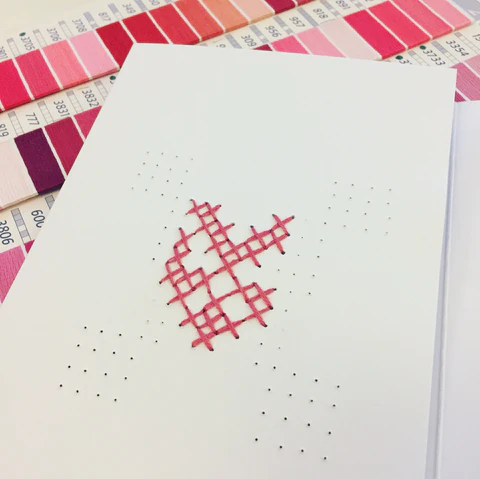
Creating a template and pre-punching holes with an awl or sharp pin allows you to cross stitch directly onto cardstock. I think this is a lovely method for making greeting cards and bookmarks, in particular. To hide the back of the stitching, glue or blanket stitch another piece of cardstock in place.
Cross Stitch on Window Screening
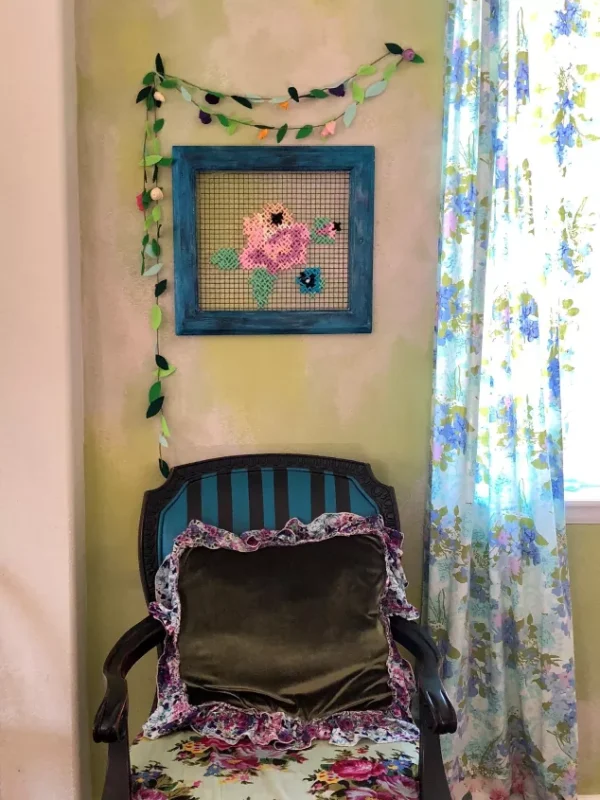
Or chicken wire or hardware cloth! If you stick to window screening, you can keep the embroidery floss, but chicken wire and hardware cloth likely require upscaling to yarn.
Cross Stitch on Wood
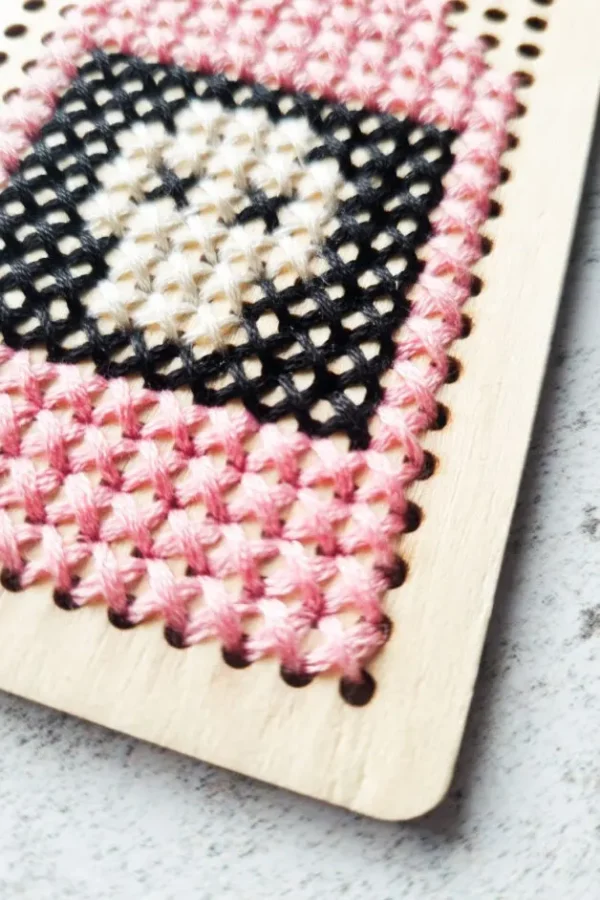
The cross stitching in this article is done on store-bought wooden blanks, which would not work to solve either my boycotting the economy issue or my having too much stuff issue, BUT if you’ve got some thin wood to experiment with, and a drill that you’re not afraid to wield, you could easily DIY these blanks. Alternatively, if you’ve got some pegboard going spare, cut it to size and cross stitch on it with chunky yarn.
P.S. Want to know even more ways to use burlap in your crafting? Check out these 17 additional ideas!