
 Wherever you might normally stand on the felt controversy, I think that we can all get behind the claim that felted wool?
Is awesome.
Felted wool has all the benefits of wool for crafting–it’s sturdy, can be shaped, holds a dimensional structure well, is durable, and has an appealing texture–and has the eco-friendly attributes of being natural and second-hand. As part of my green crafting manifesto, I do not buy new things, nor do I intentionally buy products exploitative of the world’s creatures (please, don’t ask me about glue!), and yet when I buy a wool sweater from the Goodwill Outlet Store, I don’t have to worry about whether or not the wool has an organic certification, or about the high price of organic wool. I just think, “Yay, recycling!”
And yet, the wool sweater you take home from the thrift store requires some work before it becomes that versatile wool felt. Here’s exactly the work you need to do:
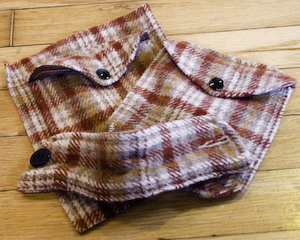
2. Set aside any parts of your sweater that you might want to incorporate into a project without felting–pockets, for instance, or buttoned cuffs. Also cut off any snaps and buttons to reuse in another project.
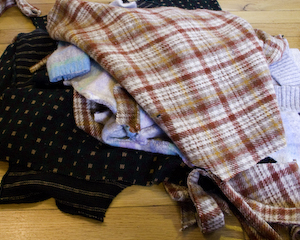 3. Machine-wash your pile of wool. The best results come from heat (choose a hot setting), agitation (choose a setting appropriate for heavily soiled clothes), and a little detergent (if I’m felting a sweater that’s already slightly felted–perhaps it made its way to the Goodwill Outlet Store because its original owner accidentally washed it–I often skip adding extra detergent, but I do have a high-efficiency washer).
4. If your wool comes out of the washing machine felted to your satisfaction, you may line dry it. Otherwise, dry your wool in your dryer, on a warm or hot setting.
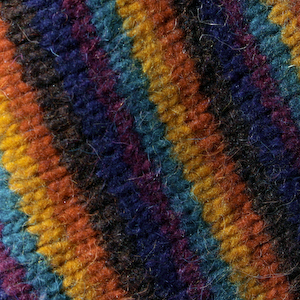 5. If your wool comes out of the dryer felted to your satisfaction, you’re all set! Otherwise, you can repeat the washing and drying steps to continue felting your wool.
Now that you’re finished, make cupcakes!



This is such great information, I’ll be linking. Isn’t the thrift store the GREATEST craft shop ever?!?!
Pingback: How to Felt a Sweater for Crafting | EcoSilly
I know! Estate sales and garage sales are also pretty tops on my list, too.
I should have mentioned that when you throw your wet wool into the dryer to felt, you can also throw in a couple of tennis balls to add some extra agitation–that helps with the felting.
I have been collecting sweaters to make into the backing of a baby quilt. I only bought 100% wool sweaters (from thrift stores) but none of them ever felted in the washer. It was only then that I realized that I have reversed water pipes and when I thought that I was washing them with hot water, it was freezing. I hate to think of all those “cold” water washes.
As a side note, if you don’t have tennis balls, the cups that you use to measure liquid detergent work well in the dryer for agitation (nope, they won’t melt).
No way! And how about all the times you thought you were saving money by washing everything on cold and the water was probably boiling!
I accidentally partly felted a REALLY expensive organic wool mattress cover by putting it on the “air dry” setting in my dryer. It will likely take a couple of years of therapy before I can forgive myself for that one.
Pingback: Five Felted Wool Weekend Projects : Crafting a Green World
Pingback: Make Felted Wool Rocks that RAWK! : Crafting a Green World
Pingback: Remaking a sweater « Cheap Like Me
Pingback: Snuggable: Good Books about Making Stuffies and Soft Dolls
Pingback: Snuggable: Good Books about Making Stuffies and Soft Dolls : Crafting a Green World
Pingback: Fashioning Felt Exhibit Now in New York City at the Cooper Hewitt : Crafting a Green World
Great information. I’ve been felting sweaters for blankets for several years, but I learn something from others all the time. Like, cutting up the sweaters BEFORE washing them – I will give that a try now.
Also, when I have a lot of sweaters I take them to the laundry mat for the first wash – just be sure to wipe the washer out when you’re done since there may be some wool fiber left behind.
Thanks again.
Great information. I’ve been felting sweaters for blankets for several years, but I learn something from others all the time. Like, cutting up the sweaters BEFORE washing them – I will give that a try now.
Also, when I have a lot of sweaters I take them to the laundry mat for the first wash – just be sure to wipe the washer out when you’re done since there may be some wool fiber left behind.
Thanks again.
Great information. I’ve been felting sweaters for blankets for several years, but I learn something from others all the time. Like, cutting up the sweaters BEFORE washing them – I will give that a try now.
Also, when I have a lot of sweaters I take them to the laundry mat for the first wash – just be sure to wipe the washer out when you’re done since there may be some wool fiber left behind.
Thanks again.
Great information. I’ve been felting sweaters for blankets for several years, but I learn something from others all the time. Like, cutting up the sweaters BEFORE washing them – I will give that a try now.
Also, when I have a lot of sweaters I take them to the laundry mat for the first wash – just be sure to wipe the washer out when you’re done since there may be some wool fiber left behind.
Thanks again.
I’ve tried to felt a wool sweater in washer,even boiled it on stove still won’t shrink why? Tag says it’s wool
I’ve tried to felt a wool sweater in washer,even boiled it on stove still won’t shrink why? Tag says it’s wool
Pingback: Will I make it this Christmas?-last minute with the kids « harrysdesk
Pingback: bunting… « the card catalog
Thank you for the very simple felting instructions. I am always on the look out for new and intersting ways to do things and this fits the bill. I am on my way to the thrift store!!!!
This is a very helpful tutorial. May I add one suggestion? It’s very wise, when you’re felting wool in your washing machine, to put it into a fine mesh drawstring bag first.
Wool items can throw off a lot of fuzz during the felting process, and these clumps of fiber can wreak havoc on many washing machines. A friend of mine had her machine conk out, and during the costly repairs, they found the culprit to be wads of fiber clogging the machine.
A mesh bag is very inexpensive and keeps that excess fiber held in the bag. You can then pop the sweaters, etc. out of the bag before you run them through the dryer.
This is a very helpful tutorial. May I add one suggestion? It’s very wise, when you’re felting wool in your washing machine, to put it into a fine mesh drawstring bag first.
Wool items can throw off a lot of fuzz during the felting process, and these clumps of fiber can wreak havoc on many washing machines. A friend of mine had her machine conk out, and during the costly repairs, they found the culprit to be wads of fiber clogging the machine.
A mesh bag is very inexpensive and keeps that excess fiber held in the bag. You can then pop the sweaters, etc. out of the bag before you run them through the dryer.
Pingback: Thanksgiving Crafts that You Can Make out of Recycled Materials – Crafting a Green World
Took a workshop on making a purse from felted wool over a plastic mesh form. The teacher had already felted the wool and made them into kits. It was so much fun I want to try it in another color and use an old leather handbag as the base. I didnt know about cutting the sweaters apart. They are so warm I’m keeping one to wear.
How much does the sweater shrink?…how many sizes?…I have an angora sweater that my Mum knit for herself and it is really big on me…but dont want to shrink it to where it becomes too small
Please advise
Thanks
It’s unlikely that you would be able to shrink the sweater in a way that leaves it perfectly formed, only smaller. The shrinking process is unpredictable unless you’ve shrunk that exact same yarn in that exact same sweater pattern before, and it’s generally very uneven–it may shrink far more in length than in width, giving you a short, wide sweater, the arms may shrink in width far more than length, giving you long but impossibly thin sleeves, etc.
Does cashmere, angora qualify as wool? Would I be able to felt it? If I had a sweater that says 50 % wool, 50% angora, could it be felted?
Most animal hairs, including cashmere and angora, do felt. However, the trick is that different hairs, and even different yarns made from the same hair, won’t felt the exact same way, so felting a blend of any kind can yield an unpredictable result.
I have several sweaters that are 100% cashmere and they don’t look felted. I can still see the weave and am afraid to use them – how can I be sure? I’m a newbie.
Pingback: Crafting a Green World | How To: DIY Recycled Felt Koozie for Dad | Crafting a Green World
Pingback: Easter Egg Crafts | Care2 Healthy Living
Pingback: 20 Eco-Friendly Easter Egg Ideas | What About Pollution
When felting coats, do I remove the liner before or after felting?
Remove the liner, because it won’t felt, and so will warp the wool coat as it felts, and you won’t have as much usable felted wool fabric. I also like to cut apart all seams, because even those warp the wool as it’s felting.