
Whether you craft for gifts, to sell at craft fairs, or run a small business, a beautiful fabric label can add the perfect finishing touch. Fabric labels are important for brand recognition and often the only way to identify who made the product. You should proudly display your name or logo on all products you make.
It is amazingly easy to make a small run of your own fabric labels. I have found 5 great tutorials for making fabric labels. A few material substitutions and any of these tutorials can help you make eco-friendly fabric labels. With each tutorial I will give material recommendations and tips for making them greener.
- Allyson Hill shows us how to make sophisticated DIY fabric labels using an ink-jet printer and printable fabric roll. Make it greener: Use the 100% Silk Habotai PhotoFabric Roll,instead of the cotton poplin the author used. Try dipping label edges in watered-down EcoGlue to prevent fraying.
- Sew Take A Hike offers a Washable Label Tutorial using printable fabric with tips for making labels colorfast and washable. Make it greener: Try making your own printable fabric with 100% organic cotton with the HP Making Printable Fabric tutorial. Check out Near Sea Naturals Pre-cut & Clearance section for great deals on sustainable fabrics. The tutorial recommends cotton fabric. To make natural fabrics, like cotton and silk, colorfast HP and a few of the above tutorials recommend using Bubble Jet Set 2000. They say it is 85% water and contains ingredients found in regular laundry detergent, but they still recommend good ventilation and rubber gloves. If the labels are going on a product that is not washable, then I recommend skipping this step.
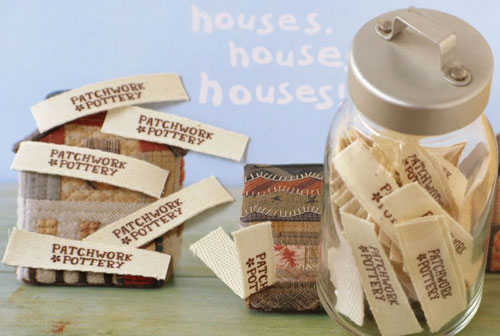
- Patchwork Pottery shows how to make fabric labels with iron-on transfer paper. Make it greener: Using iron-on transfers for your labels allows you greater flexibility with the material. Try using 100% organic cotton bias tape or twill tape from Near Sea Naturals available in a variety of widths.
- Carina’s Craftblog has a cute label tutorial using a self-inking DIY stamp. Using your own stamp is a great way to print your logo on a variety of substrates. You can have a stamp made with your logo or even your own handwriting at most office supply stores. Make it greener: Order a Green Line Eco-friendly self-inking stamp made from post-consumer recycled plastic with water-based inks. At a minimum look for a water-based fabric ink pad or ink that you can apply to the stamp with a brayer. Also, skip the fusible web altogether. Machine stitch or hand-sew your labels in place.
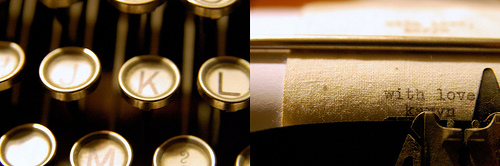
- My personal favorite for ingenuity and simplicity is Make Something’s tutorial for typewriter fabric labels. If you have a typewriter this is definitely worth a try. Make it greener: Use remnant fabric from your stash. If you have to buy new fabric, choose 100% organic cotton.
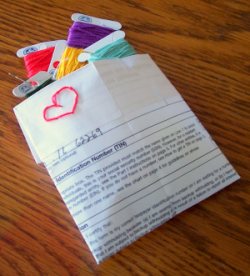
[Top Image courtesy of Laurraine, Patchwork Pottery]
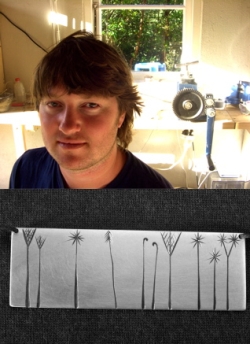
[Bottom Image courtesy of Karyn, Make Something]



For option number four, wouldn’t water based inks just wash out?
For option number four, wouldn’t water based inks just wash out?
For option number four, wouldn’t water based inks just wash out?
For option number four, wouldn’t water based inks just wash out?
Thanks Jackie! What a great post! And I love your blog! Definitely bookmarking it. Hugs, Laurraine
Thanks Jackie! What a great post! And I love your blog! Definitely bookmarking it. Hugs, Laurraine
Thanks Jackie! What a great post! And I love your blog! Definitely bookmarking it. Hugs, Laurraine
Remember Print Gocco! You can also print custom labels with the Gocco and use up scraps in the process.
Print Gocco is a great idea! I got one second hand a year ago and still (even in my screenprinting fury) have not used it. It would be perfect because it’s small enough to be manageable, and you can keep going as long as you keep it wet!
Remember Print Gocco! You can also print custom labels with the Gocco and use up scraps in the process.
Remember Print Gocco! You can also print custom labels with the Gocco and use up scraps in the process.
Print Gocco is a great idea! I got one second hand a year ago and still (even in my screenprinting fury) have not used it. It would be perfect because it’s small enough to be manageable, and you can keep going as long as you keep it wet!
Print Gocco is a great idea! I got one second hand a year ago and still (even in my screenprinting fury) have not used it. It would be perfect because it’s small enough to be manageable, and you can keep going as long as you keep it wet!
Remember Print Gocco! You can also print custom labels with the Gocco and use up scraps in the process.
Print Gocco is a great idea! I got one second hand a year ago and still (even in my screenprinting fury) have not used it. It would be perfect because it’s small enough to be manageable, and you can keep going as long as you keep it wet!
Awesome roundup! I’ve made labels using the iron on transfer method before, and it works great!
Awesome roundup! I’ve made labels using the iron on transfer method before, and it works great!
Awesome roundup! I’ve made labels using the iron on transfer method before, and it works great!
Awesome roundup! I’ve made labels using the iron on transfer method before, and it works great!
I think a fabric ink being water-based would maybe mean that it’s free of synthetics (no icky smell) and you could wash it away if it hasn’t dried yet (if you spill, for instance), but the fabric paint I use is heat-set with an iron, and after that it certainly doesn’t wash out.
I think a fabric ink being water-based would maybe mean that it’s free of synthetics (no icky smell) and you could wash it away if it hasn’t dried yet (if you spill, for instance), but the fabric paint I use is heat-set with an iron, and after that it certainly doesn’t wash out.
I think a fabric ink being water-based would maybe mean that it’s free of synthetics (no icky smell) and you could wash it away if it hasn’t dried yet (if you spill, for instance), but the fabric paint I use is heat-set with an iron, and after that it certainly doesn’t wash out.
Pingback: Finding Custom Eco-friendly Labels and Hangtags : Crafting a Green World
Debbie, water-based inks typically need to be heat-set with an iron, like Julie mentioned, and then they are washable. The ink does not wash out of the fabric if it is properly set. The key is water-based inks can be cleaned up with water and soap. They are non-toxic and contain no harsh solvents.
Debbie, water-based inks typically need to be heat-set with an iron, like Julie mentioned, and then they are washable. The ink does not wash out of the fabric if it is properly set. The key is water-based inks can be cleaned up with water and soap. They are non-toxic and contain no harsh solvents.
Debbie, water-based inks typically need to be heat-set with an iron, like Julie mentioned, and then they are washable. The ink does not wash out of the fabric if it is properly set. The key is water-based inks can be cleaned up with water and soap. They are non-toxic and contain no harsh solvents.
Debbie, water-based inks typically need to be heat-set with an iron, like Julie mentioned, and then they are washable. The ink does not wash out of the fabric if it is properly set. The key is water-based inks can be cleaned up with water and soap. They are non-toxic and contain no harsh solvents.
Pingback: INTRODUCING : GIRL NUMBER TWENTY at make something
Hi! I love the blog 🙂 Something that concerned me with this post was the suggestion on how to make #1 greener by using 100% Silk Habotai PhotoFabric Roll. I don’t think that killing hundreds of animals (silk worms) is a greener option at all! 🙂
Hi! I love the blog 🙂 Something that concerned me with this post was the suggestion on how to make #1 greener by using 100% Silk Habotai PhotoFabric Roll. I don’t think that killing hundreds of animals (silk worms) is a greener option at all! 🙂
Hi! I love the blog 🙂 Something that concerned me with this post was the suggestion on how to make #1 greener by using 100% Silk Habotai PhotoFabric Roll. I don’t think that killing hundreds of animals (silk worms) is a greener option at all! 🙂
Hi! I love the blog 🙂 Something that concerned me with this post was the suggestion on how to make #1 greener by using 100% Silk Habotai PhotoFabric Roll. I don’t think that killing hundreds of animals (silk worms) is a greener option at all! 🙂
how can you design your labels here and print it?
how can you design your labels here and print it?
how can you design your labels here and print it?
how can you design your labels here and print it?
anyone have any washfast experience with using soy-based ink for this? i switched over on my inkjet and don’t want to sacrifice one of those expensive sheets experimenting if someone else knows already…great article!
anyone have any washfast experience with using soy-based ink for this? i switched over on my inkjet and don’t want to sacrifice one of those expensive sheets experimenting if someone else knows already…great article!
anyone have any washfast experience with using soy-based ink for this? i switched over on my inkjet and don’t want to sacrifice one of those expensive sheets experimenting if someone else knows already…great article!
anyone have any washfast experience with using soy-based ink for this? i switched over on my inkjet and don’t want to sacrifice one of those expensive sheets experimenting if someone else knows already…great article!
silk is still a natural and biodegradable fibre and a friendlier production than normal cotton, the environment and animal rights are close but there is always that line that makes it difficult to be green and animal friendly all the time so there’s usually a choice of morals :
silk is still a natural and biodegradable fibre and a friendlier production than normal cotton, the environment and animal rights are close but there is always that line that makes it difficult to be green and animal friendly all the time so there’s usually a choice of morals :
silk is still a natural and biodegradable fibre and a friendlier production than normal cotton, the environment and animal rights are close but there is always that line that makes it difficult to be green and animal friendly all the time so there’s usually a choice of morals :
silk is still a natural and biodegradable fibre and a friendlier production than normal cotton, the environment and animal rights are close but there is always that line that makes it difficult to be green and animal friendly all the time so there’s usually a choice of morals :
Great information! Will work great with my products. You have a great site here. Thanks
Great information! Will work great with my products. You have a great site here. Thanks
Great information! Will work great with my products. You have a great site here. Thanks
Great information! Will work great with my products. You have a great site here. Thanks
Pingback: Razblint » Typed Fabric Labels
I like every post in this blog. Really a nice work has done.
Nice post, I’m interested in the human brain and I know more after reading your article.
Thanks I just made my own labels in a crunch. I also shared your post over on my blog in my Clothing Tags:Best and worst of. http://www.thefashionbusinessmentor.wordpress.com
Pingback: Guest Post from Marie of the Underground Crafter on gifting handmade | Anastacia Knits
First of all, you’re the coolest – I have a great idea and second LOVE your blog, I can spend hours here!
I love this blog! I do have a question/comment on the 3rd technique. I am currently making my labels with transfer paper and I was actually searching a more sustainable eco-friendly way. This transfer foil is really plastic and when you heat it you can smell the chemicals in the glueing/melting process. So if anyone has better products to suggest… I will be more than happy to hear it.